
Thinking about trying a cold plunge for the first time? Here's what happens when you step into cold water, why your breathing changes and how to make your first experience feel a little less intimidating.
Let's be honest. The thought of stepping into cold water isn't everyone's idea of relaxation.
You might have watched people slipping into icy water, looking completely calm, and wondered how on earth they do it.
Or perhaps you've been sitting in a lovely warm sauna, looking over at the cold plunge and thinking, "Maybe next time."
If that sounds familiar, you're definitely not alone.
At YOU Sauna Hitchin, we believe your first cold plunge should be about curiosity, not courage. You don't need to prove anything, stay in for a certain amount of time or be the coldest person in the room.
It's simply about discovering how your body responds and finding what feels right for you.
What happens when you first enter cold water?
The moment cold water touches your skin, your body notices.
You might take a sudden breath, feel your heart beating faster or notice your breathing becoming quicker.
This is known as the cold shock response, a natural reaction to sudden cold exposure.
According to the Royal National Lifeboat Institution (RNLI), cold water at 15°C or below can trigger this response, particularly when someone enters suddenly.
Your blood vessels near the skin narrow, your heart rate can increase and your blood pressure may rise.
It's your body's way of responding to a sudden change in temperature.
For some people, the sensation feels exciting. For others, it can be uncomfortable or overwhelming, especially at first.
That's why there's no need to rush.
Why does your breathing change?
One of the first things people notice in cold water is their breathing.
You might gasp or start taking quick, shallow breaths without meaning to.
This happens automatically. It isn't simply a matter of willpower.
The British Heart Foundation explains that sudden cold exposure can place extra strain on the cardiovascular system, particularly for people with certain heart conditions.
If you're new to cold plunging, the most important thing is to enter slowly and stay in control.
Before getting in, take a few comfortable, natural breaths. Step into the water gradually, keeping your head above the surface.
Once you're in, avoid forcing your breathing or holding your breath. Give yourself time to adjust, and step out if your breathing feels difficult to control.
You can always try again another day.
Does colder mean better?
Not necessarily.
There's a common belief that the colder the water, the greater the benefits. But research hasn't established one perfect temperature or duration for everyone.
At YOU Sauna Hitchin, we have two cold plunges:
13°C: Our less intense option, which may feel more approachable if you're curious about cold water.
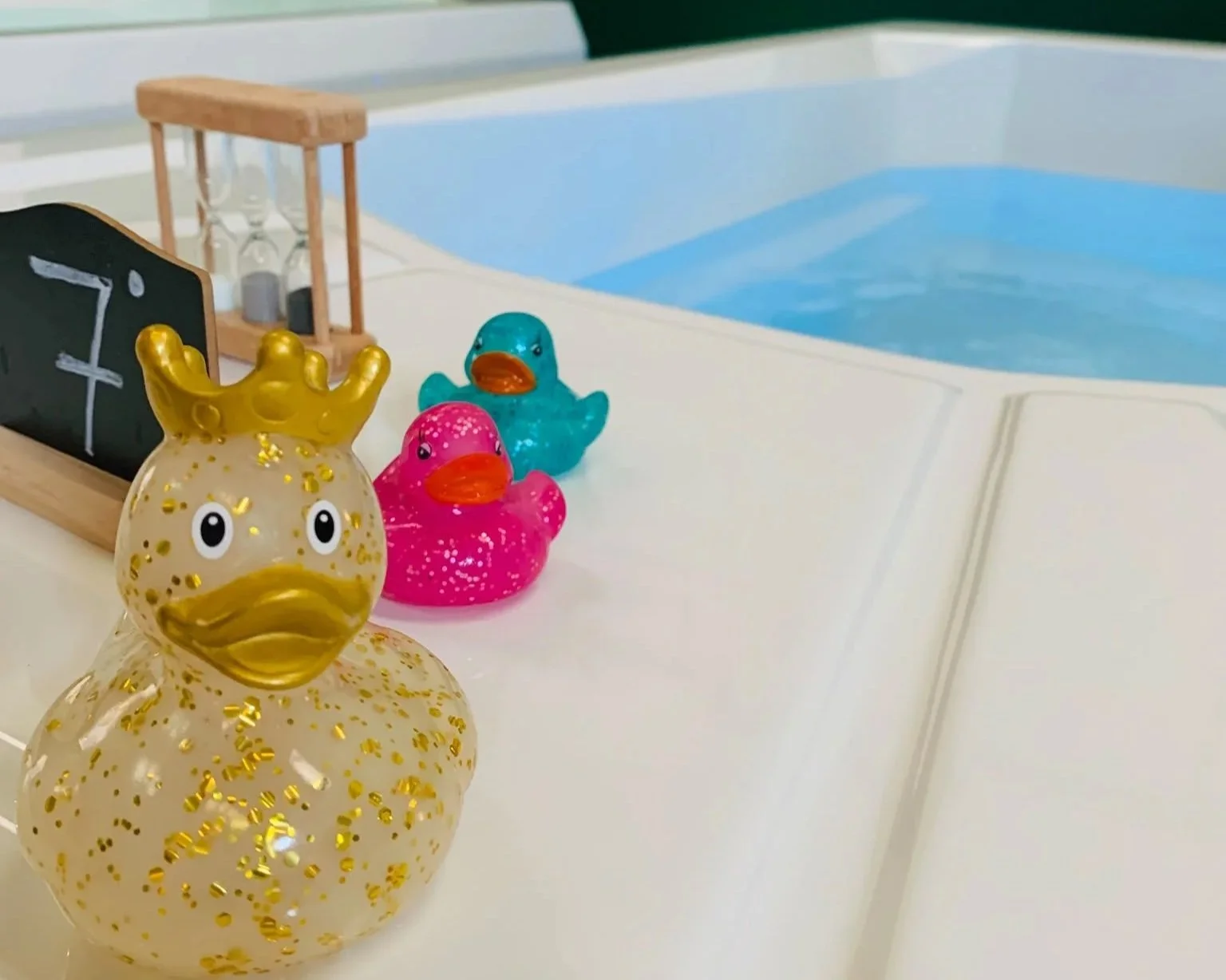
7°C: A much colder experience for people who already know how they respond to cold immersion.
Both temperatures are cold enough to trigger a strong physical response, particularly when you're new to plunging.
And there's no prize for choosing the colder one.
A shorter, more comfortable experience is far better than forcing yourself to stay in water that feels overwhelming.
How long should your first cold plunge last?
You might have seen people talking about spending two, three or even five minutes in icy water.
But there's no scientifically established minimum time that everyone needs to reach.
For your first experience, think about getting comfortable with the sensation rather than watching the clock.
You might decide that dipping your feet in is enough. Or you might enter gradually and stay for a few moments before getting out.
Both are perfectly fine.
If you feel dizzy, faint, unusually breathless, develop chest discomfort or cannot control your breathing, get out safely and seek help.
Cold plunging should never feel like something you have to endure.
Do you have to cold plunge after a sauna?
Absolutely not.
Although sauna and cold plunge are often enjoyed together, there's no rule saying you must do both.
Moving directly from a hot sauna into very cold water creates a significant temperature change, which can put additional strain on your circulation.
If you're curious, give yourself time to cool down after the sauna, drink some water and decide whether you feel comfortable trying the plunge.
And if you don't fancy it?
That's completely fine too.
At YOU Sauna, you can enjoy the sauna, have a refreshing shower and spend time relaxing in our lounge with a drink.
Your visit is still a complete experience.
Your first cold plunge at YOU Sauna Hitchin
We know that trying something new can feel a little intimidating, especially when everyone around you seems to know exactly what they're doing.
But our space isn't about competition or pushing limits.
It's about slowing down, feeling welcome and enjoying some time away from everyday life.
Whether you try the 13°C plunge, simply dip your toes in or decide to stay cosy in the sauna, you're welcome to experience it your own way.
Come alone, bring a friend or meet someone new along the way.
And remember, the person who stays in the cold water the longest isn't necessarily getting the most out of their visit.
Sometimes the best thing you can do is listen to your body.
A little curiosity goes a long way
Your first cold plunge might surprise you. You may enjoy the refreshing feeling, or you might decide it's not for you.
Either way, you've learned something about yourself.
Cold water isn't a test of toughness, and wellbeing doesn't have to be uncomfortable to be worthwhile.
At YOU Sauna Hitchin, we're here for the warmth, the cold, the calm and everything in between.
Sauna. Plunge. Reset.
Curious to try it for yourself? Come and discover our social sauna and cold plunge experience in Hitchin, Hertfordshire.
Explore our sessions at YOU Sauna Hitchin
Research and further reading
British Heart Foundation: Guidance on cold water swimming and the effects of cold exposure on the heart.
https://www.bhf.org.uk/informationsupport/heart-matters-magazine/activity/cold-water-swimming
Royal National Lifeboat Institution (RNLI): Cold water shock and how to stay safe in cold water.
https://rnli.org/safety/know-the-risks/cold-water-shock
Tipton MJ et al.: Cold water immersion: kill or cure? Experimental Physiology (2017). A scientific review examining the body's responses to cold water immersion.
https://doi.org/10.1113/EP086283
A note on safety: Cold water immersion isn't suitable for everyone. If you have a heart condition, uncontrolled high blood pressure or another medical concern, seek medical advice before trying it. Never hold your breath or submerge your head during a cold plunge.